


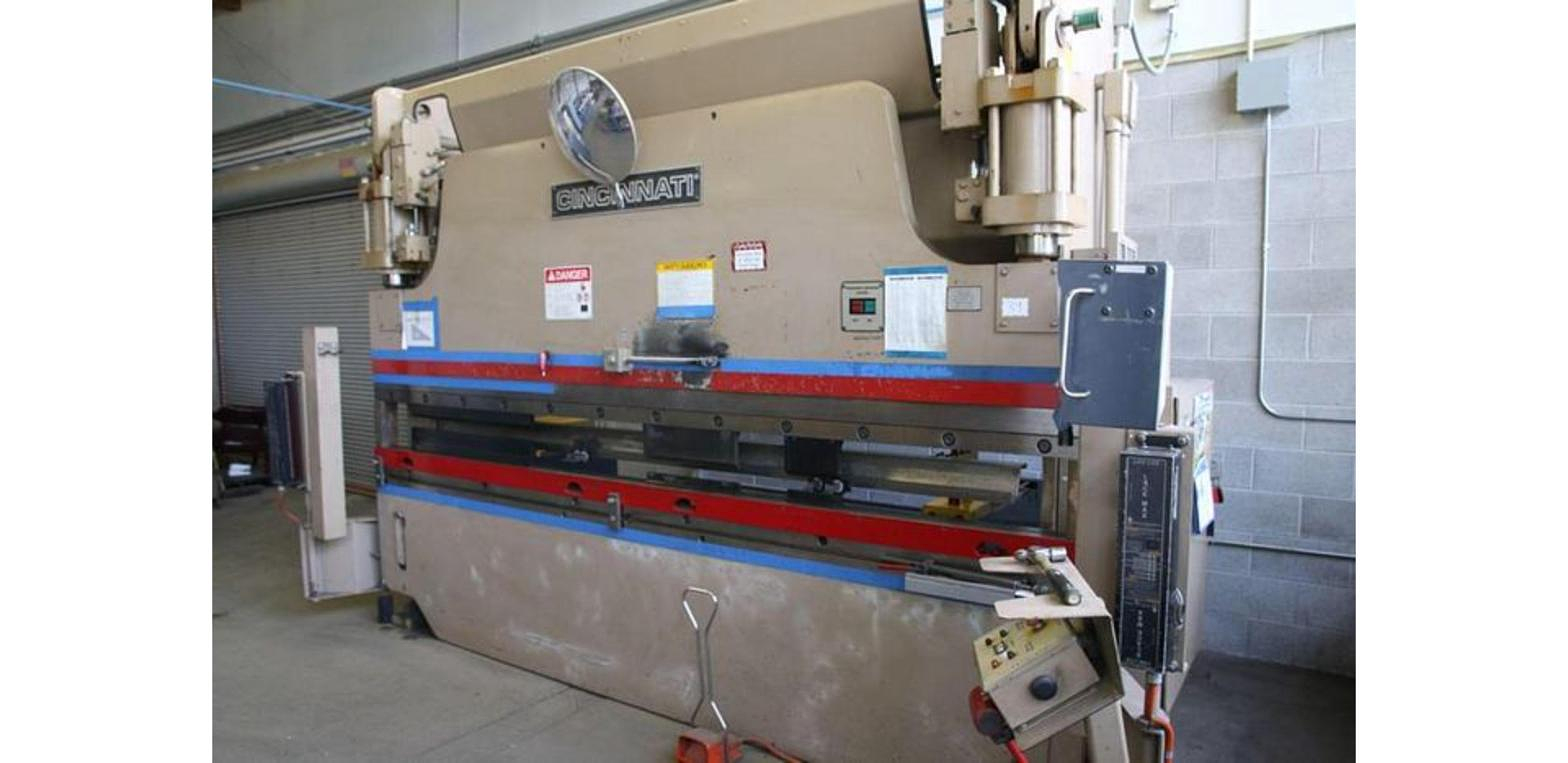
Sizing a press brake comes down to two things: the tonnage it takes to bend your toughest part and the bed length to fit your longest one. Tonnage depends on the material, its thickness, the length of the bend and the die opening. Get those four inputs, read them off the brake or tooling maker's bending chart, and leave headroom.
The Four Inputs That Set Tonnage
- Material. Bending charts are usually built for mild steel. Stainless takes more tonnage than mild steel at the same thickness, and soft aluminum takes less. If you bend high strength steel, use the chart for that grade or ask the tooling maker.
- Thickness. Tonnage climbs fast as material gets thicker. At the same die opening it goes up roughly with the square of the thickness, so a small step in gauge can be a big step in tons.
- Bend length. Charts give tons per foot. A bend twice as long takes twice the tonnage.
- Die opening. A wider V takes less force and leaves a larger inside radius. The common rule of thumb for air bending mild steel is a V opening about eight times the material thickness. Go narrower and the tonnage goes up quickly.
How you bend matters too. Air bending takes the least force. Bottoming takes more, and coining takes far more. Most shops size a brake for air bending and keep coining to short, thin parts. Coining is also common work for used stamping presses.
Reading the Chart
Brake builders and tooling suppliers publish air bend charts. Find your thickness, pick the die opening, and read the tons per foot. Multiply by the longest bend you plan to make. That number should sit comfortably under the rated tonnage of the machine, not right at it. Running a brake at its limit every shift is hard on the hydraulics and the frame. On a used machine like our Cincinnati CBII hydraulic press brake, go by the rating on the nameplate and the manual, not a guess from the model number.
Two other limits catch people. First, the punch and die have their own load rating per foot, and it can be lower than the machine. Second, a brake is rated for load spread over a length of the bed. Putting full tonnage on a short part in one spot can damage the ram or bed, so check the manual for the minimum length at full load. When a brake comes out of a plant liquidation, ask whether the punches and dies go with it, since tooling is a real cost.
Length, Throat and Stroke
Bed length is only part of it. The distance between the side housings sets the longest part you can bend all the way through. Throat depth limits how deep a flange or panel you can form past the housings. Open height and stroke decide whether a deep box will clear the punch on the way out. Look at the backgauge travel too, since it sets the flange widths you can locate. Match your blanking to the brake as well. The used metal shears or power squaring shear cutting your blanks should handle the same length the brake bends.
Where the Brake Fits in the Shop
Most parts get cut before they get bent. Blanks come off a shear, a laser, or a cell running plasma cutting robots or water jet cutting robots. After the brake, parts usually head to welding. That can be manual or a cell running MIG welding robots. Our post on the arc welding industrial robot covers the basics, and we keep FANUC weld arms like the FANUC Arc Mate 100iC/6L in stock.
High volume shops also load brakes with robots. The ideas are the same as in robotic press tending, and a mid size arm like the FANUC M-20iA is a common size for handling sheet blanks. For larger blanks, our material handling robots post covers bigger arms.
If you are setting up a full line, machinery financing can spread out the cost.
Fabrication Equipment We Carry
Stock changes. Check the listing for the details on each machine.
- Cincinnati CBII 90-350 hydraulic press brake: 1998, listed under used fabrication equipment
- Tennsmith A3616 and Wysong 1652 shears
- Accurshear Cost Cutter power squaring shear: 1980, under presses and fabrication
- plate bending rolls: Kling plate rolls, for rolling plate into cylinders
- robotic weld cells: Genesis System 3X cells, R-30iB, 2012 and 2014
- Lincoln 455M MIG welding power supply
- Pema 5000 CR robotic weld positioner: 1995
Welding stock is all under used welding equipment. All machines ship FOB Imlay City, Michigan, and the buyer arranges freight.
Related Guides
Selling a Press Brake?
We buy fabrication equipment, one machine at a time or a whole shop. Send us what you have through our sell your fabrication equipment page, or set up equipment appraisals for a full shop.
For questions on the Cincinnati or anything else listed, call 586-752-0090 and press 1 for sales, or send us a message.