


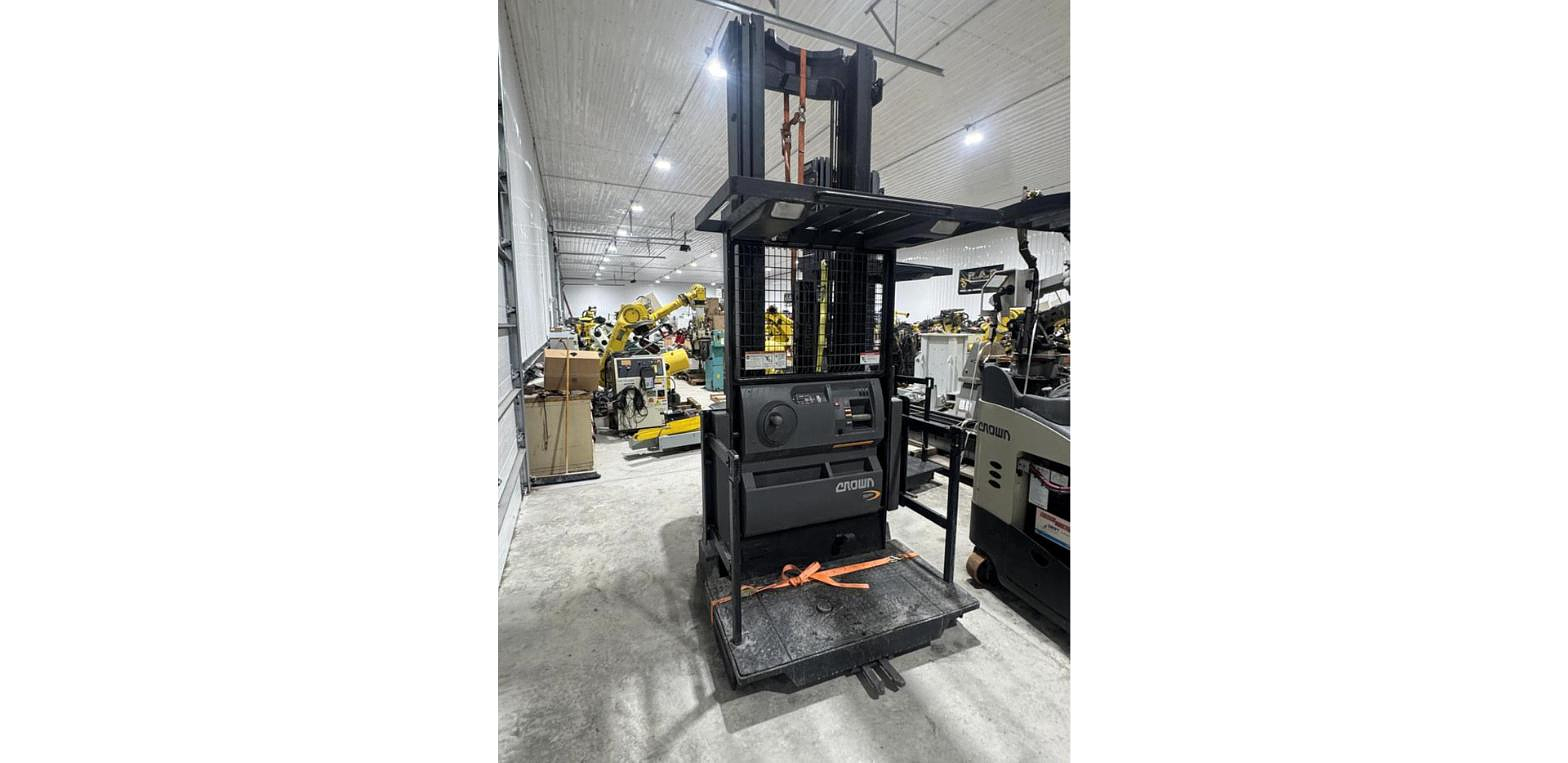
When you buy a used forklift, start with the data plate. It gives the rated capacity at a stated load center and lift height, for the truck as it is equipped. Then check the battery or engine, the mast and chains, the forks, the hour meter and the tires, and make sure the truck type fits your aisles and loads.
Read the Data Plate First
The data plate is the truck's rating, not the number in an ad. It shows the capacity at a load center, the maximum lift height, and on electric trucks the battery weight the truck needs. Add a side shifter or other attachment and the capacity changes, so the plate has to match the truck as you will run it. If the plate is missing or unreadable, get it replaced through the manufacturer before the truck goes to work.
Think about what you actually lift. A pallet of parts is one thing. Machinery is another. Many arms in the FANUC R-2000 series robots weigh over a thousand kilograms before you add the controller, which can be more than a small warehouse truck is rated for. The same goes for machine tools like our used CNC machines, so get the weight from the builder before you lift. Size the truck for the heaviest thing it will move, not the average.
Electric Trucks: The Battery
On an electric truck the battery is one of the most expensive wear items. Ask how old it is. Look for corrosion, cracked cases and low water. With a hydrometer you can read each cell's specific gravity after a full charge, and a weak cell shows up quickly. Make sure the charger matches the battery voltage and size. The battery is also part of the counterweight, so never swap in one lighter than the minimum on the data plate.
The Mast, Chains and Hydraulics
- Chains. Lift chains stretch with use. Check them with a chain wear gauge and look for stiff links and rust.
- Mast. Raise it to full height and lower it. It should move smoothly without jerks, and the rollers should not have flat spots.
- Hydraulics. Look for leaks at the lift and tilt cylinders, hoses and fittings. A mast that drifts down under load points to a cylinder or valve problem.
- Carriage. Check the carriage and backrest for cracks and bent members.
The Forks
Forks wear at the heel, where they bend. The common rule is to take a fork out of service once the heel has worn 10 percent thinner than the upper shank. Check for cracks at the heel and the hooks, bent tips, and forks that sit at different heights. A matched set matters more than people think.
Hours and Condition
The hour meter tells part of the story. Electric trucks may log key hours and drive or lift hours separately, so find out what the meter is counting. A truck with modest hours that worked in a freezer, or in a heat treat area full of industrial furnaces and ovens, can be in worse shape than a higher hour truck from a clean warehouse. Check the brakes, steering, horn, lights, the seat or presence switch, and the operator controls.
Match the Truck to the Job
- Sit down counterbalanced trucks handle general plant work. A cushion tire electric forklift like our Hoist FKE 15 suits smooth indoor floors.
- Reach trucks work narrow aisles and high racking. Our Crown reach truck is an RR5725-35 from 2015.
- Order pickers lift the operator with the load for picking from racks. Our Crown order pickers are SP 3500 series trucks from 2015 and 2016. Operators on an order picker need fall protection.
Not every move needs a forklift. A Southworth lift table brings parts to working height at a station, and Zeta Group automation conveyors and motorized conveyors move product between operations. Some plants now use mobile robots for repeat runs, like our KUKA KMP 600S mobile robot.
At the end of a line, palletizing robots such as our FANUC M-410iB/700 palletizing robots build the loads your forklifts carry out. Our post on material handling robots covers more options.
Forklifts and Plant Equipment We Carry
Stock changes. Check each listing for the model and year shown.
- used forklifts: Crown SP 3500 series order pickers, a Crown RR5725-35 reach truck and a Hoist FKE 15
- Factory Cat GTX floor scrubber: 2023
- Nilfisk CS7000 floor scrubber: 2018
- used plant equipment: support equipment, including a 2016 Caterpillar water truck
All equipment ships FOB Imlay City, Michigan, and the buyer arranges freight. For a fleet or a larger purchase, look at our forklift financing options.
Related Guides
Have Trucks to Sell?
We buy forklifts and the rest of a plant's equipment, from one truck to a full plant liquidation. Start on our sell your used forklifts page, or ask about equipment appraisals.
For details on a truck, call 586-752-0090, extension 1 for sales, or contact our sales office.