


To size an air compressor, add up the CFM every tool and machine draws at the pressure it needs, adjust for how many run at the same time, and add room for leaks and growth. Pick a compressor that covers that demand at your header pressure and duty cycle, then size the dryer to the compressor's full output.
Start With What Uses Air
Walk the plant and list every air user. Most have a rated flow in CFM at a rated pressure, on the nameplate or in the manual. In a typical machine shop or robot plant the list looks something like this:
- CNC machines. Tool changers, spindle air blast and chip blowoff. Our used CNC machines list the control and model, so you can pull the air spec from the builder's manual.
- Robot tooling. Air grippers, vacuum cups and tool changers. Our posts on end of arm tooling and robotic quick change tooling cover what goes on the end of the arm.
- Dispensing. Many sealant and adhesive systems use air. See our post on dispensing robot applications.
- Presses. Many mechanical presses run the clutch, brake and counterbalance on shop air. Our used stamping presses need a steady supply.
- Welding and cutting. Pneumatic spot guns in robotic spot welding cells, and air plasma for plasma cutting robots, both pull real volume.
- Hand tools and blowoff. Grinders, impact guns and open blow guns add up fast.
Figure Out What Runs at Once
Adding every nameplate gives you the worst case. Most plants never run everything at once. Go through the list and estimate how much of each hour each tool actually runs. A blow gun used a few seconds at a time is not the same as a vertical machining center blowing chips all shift. If you already have a compressor, the best number is a measured one. Log its load and unload time, or its amps, over a full week of production, including the busiest shift.
Watch for peaks too. A big short demand, like several cylinders firing at once, may be better handled by a receiver tank near the user than by a bigger compressor.
Set the Pressure Right
Size for the pressure your equipment actually needs at the point of use, plus the drop through piping, filters and the dryer. Running the whole plant higher than it needs costs energy every hour the compressor runs. If one machine needs more pressure than everything else, give that machine its own supply instead of raising the whole system. If you are adding used FANUC robots to a line, check the air spec on the grippers and valves and plan the drop to each cell.
Leaks and Growth
Leaks are often one of the biggest air users in an older plant. Walk the floor on a quiet shift and listen, or use an ultrasonic leak detector. Fix what you find before you buy, because you do not want to size a new compressor for air you are blowing into the room. Then leave room for growth. If you are adding a line of used welding equipment or another machine next year, count it now.
Duty Cycle and Compressor Type
A piston compressor suits light, on and off use. Rotary screw compressors are built for continuous duty and are the common choice for a production plant, especially one running machine tending robots around the clock. Centrifugal compressors fit large plants with a big, steady demand. Many plants run one compressor as base load and another to trim, so the trim unit follows the swings while the base unit runs loaded. A spare unit lets you keep running when one is down for service.
Dryers and Treatment
Compressed air carries water, and water ruins valves, cylinders and paint jobs. A refrigerated dryer handles most plant air. Size it for the compressor's full flow, not your average demand, and remember that dryer ratings drop in a hot compressor room. Add filters and automatic drains, and keep the receiver drained. If you run air lines outdoors in a Michigan winter or need very dry air for painting, such as a robot paint cell on an ABB IRC5P paint controller, look at a desiccant dryer instead.
Air Equipment We Carry
Stock changes. Check the listing for the model and year shown.
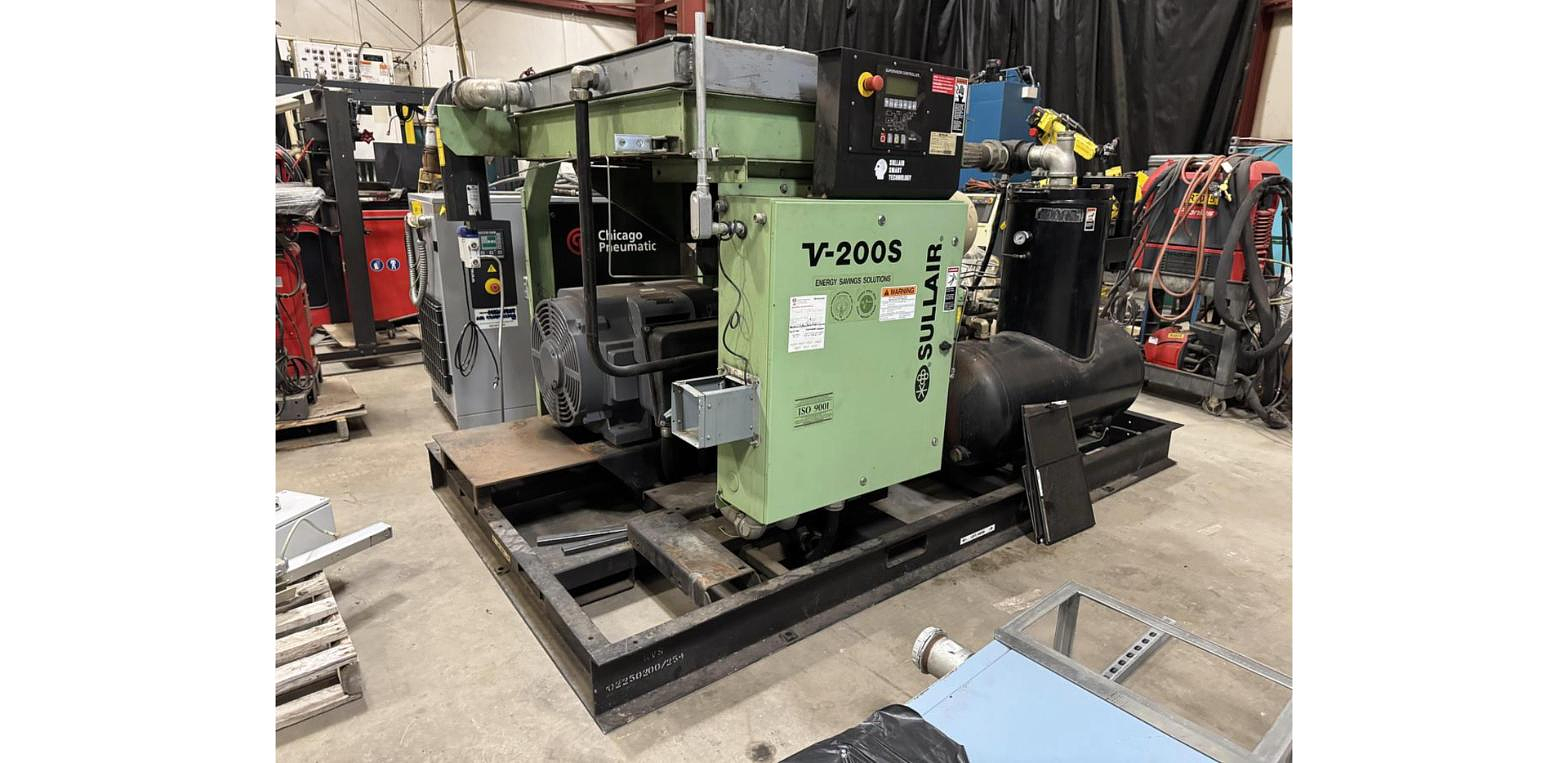
- rotary screw air compressors: Sullair V200S (2013) and Chicago Pneumatic CPVS20 (2013)
- centrifugal air compressors: Ingersoll Rand units, including a 1990 compressor and a 6CH40M1HSEHD
- refrigerated air dryer: Hankison H-66
See the full air compressors and air dryers category, and our used plant equipment for the rest of the support gear. Compressors ship FOB Imlay City, Michigan, and the buyer arranges freight. If you are replacing a compressor room, ask about equipment financing.
Related Guides
Replacing a Compressor?
We buy used compressors and dryers, and we buy whole plants through plant liquidations. Go to our sell your used compressor page, or ask about plant equipment appraisals.
For questions on a compressor or dryer, call 586-752-0090, extension 1 for sales, or message our sales team.